Every business faces challenges when it comes to growth. Some organizations seem to scale with ease, while others struggle to move forward. The difference often lies in their people strategy and how they approach developing teams. Technology, tools, and systems all play a role, but none of them replace the impact of strong leadership and engaged employees. When people feel supported, aligned, and valued, they can turn ordinary workplaces into thriving environments.
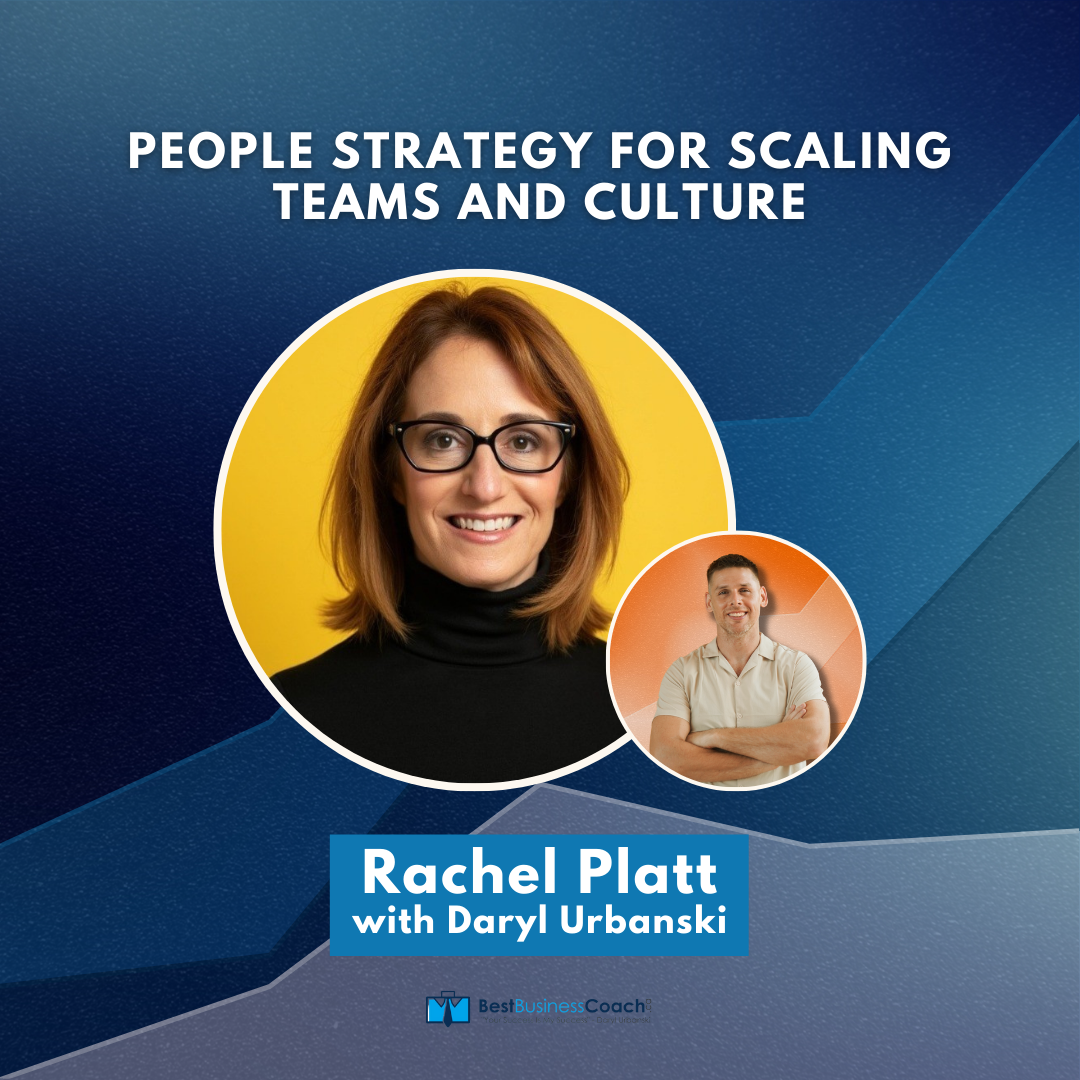
In this episode of The Best Business Podcast, host Daryl Urbanski speaks with Rachel Platt. She is the CEO of Platinum Consulting. Rachel is also an HR strategist with more than 20 years of experience guiding small and medium-sized businesses through change and growth. She has worked with leaders to build practical HR systems, foster inclusion, and strengthen company culture. Her insights shed light on how organizations can handle today’s challenges, from AI transformation and retention issues to the pressure of scaling teams.
Strong managers, healthy culture, and clear systems can be powerful levers for growth. Investing in people reduces turnover, builds alignment, and creates long-term stability for any organization. Tune in to hear how Rachel’s strategies can help leaders turn people's challenges into real business advantages.
Here are three reasons why you should listen to the full episode:
- Discover how building a values-based team fuels long-term business scaling and innovation.
- Understand how middle managers influence culture, retention, and productivity.
- Learn practical frameworks for hiring, onboarding, and people strategy that drive profit.
Resources
- Rachel Platt: LinkedIn
- PLATTinum Consulting: LinkedIn | Website
- Best Business Podcast with Daryl Urbanski - Where you can find more insightful interviews like this one.
Episode Highlights
Why People Strategy Drives Business Success
- Many businesses struggle with growth because they undervalue the role of people in their success.
- Leadership, engagement, and culture often matter more than technology or tools when it comes to long-term performance.
- Host Daryl Urbanski introduces Rachel Platt, a leader in HR strategy and founder of PLATTinum Consulting.
- Rachel shows why people strategy is not optional but a cornerstone of building resilient and scalable businesses.
From Recruiter to HR Leader: A Career with Purpose
Rachel traces her professional trajectory, starting in recruiting and then pivoting to broader HR, thanks to an observant boss who recognized her strategic mindset.
From her earliest roles, she noticed that job placement wasn’t just economic. It has a powerful purpose for families and personal well-being.
She moved into HR not to fill seats but to nurture transformation, from talent acquisition through internal growth pathways.
Giving people the skills to grow into their next level is at the heart of a strong people strategy.
When Promotions Backfire: The Peter Principle and Skills Gaps
Daryl brings up the Peter Principle. The tendency of employees to be promoted until they reach a level of incompetence.
Rachel agrees and says this becomes toxic when companies don’t support newly promoted leaders with the skills required for those elevated roles.
Doing a job well doesn’t mean a person can manage others doing that job; management is a separate skill set.
Investing in skill development at every level is essential not just for performance but for sustainable organizational health.
The Power Skills That Define Success
Rachel reframes what are typically called “soft skills” as “power skills,” essential, impactful behavioral competencies.
Critical power skills include empathy, curiosity, having difficult conversations, and adaptability in communication.
These skills, unlike hard technical expertise, aren’t optional. Instead, they define long-term effectiveness and workplace culture.
Leaders who cultivate these capacities foster psychological safety, innovation, and trust in their teams.
This shows how behavioral skills directly support people strategy in action.
Hiring Strategically: Beyond Tasks to Culture Fit
Rachel encourages employers to define success at a job not just by a checklist of skills but by desired behaviors and cultural values.
Capable hiring involves clarifying competencies first, then designing a structured, scalable interview process around them.
She shares a tip: assign interviewers to different topics to ensure you’re gathering dimensional insights on candidates.
When hiring is integrated with values and culture, not just tasks, you build a team with purpose and longevity.
Middle Managers: The Organizational Linchpins
According to Rachel, middle managers are the make-or-break point for employee experience, culture, and engagement.
These leaders shape feedback, development, expectations, and morale for the frontline team, yet they’re often under-trained.
Businesses that invest in these managers see increased retention, better cross-functional collaboration, and clearer business execution.
Training in giving and receiving feedback, setting clear expectations, and motivating by individual strengths is critical.
Regrettable Turnover and Employee Engagement
Rachel defines “regrettable turnover” as the loss of employees who you wanted to keep. They are top talent, cultural anchors, high performers.
To reduce this, companies must build a supportive, growth-oriented environment with clarity around goals and appreciation.
Engagement isn’t measured by ping-pong tables but by employees feeling valued, capable of speaking up, and connected to the mission.
Psychological safety allows people not just to perform tasks but to bring innovation, honesty, and energy to their work.
Systems that Scale: From Kitchen Table to Growth Engine
Rachel stresses the importance of building repeatable systems that don’t rely on the founder or personality-driven success.
Systems scale when they are encoded in workflows, not personalities. Examples of this are things like onboarding, delegation, training, and decision ownership.
Leaders often delay these until they’re overwhelmed, but scaling well starts with early clarity and codified processes.
A scalable people strategy ensures that systems support culture, consistency, and performance no matter how large the business grows.
The DEI Dilemma: Not Politics, But Good Humanity
Rachel shared her belief that DEI (Diversity, Equity, Inclusion) initiatives, when stripped of politics, are simply about being good humans.
Embracing diverse backgrounds, learning styles, and perspectives fosters problem solving, resilience, and creativity.
This is a business advantage, but it must coexist with standards of performance and accountability.
Leaders should focus on equity, giving people what they need to be successful, not just equality, which treats everyone the same regardless of context.
AI and the Future of Human-Centered Leadership
AI is transforming workflows but not replacing the human core: conversation, empathy, decision-making, and values-based leadership.
Rachel says use AI to eliminate drag on the system, automate processes, and surface insights, but double down on human skills.
Emotional intelligence, coaching, team trust, and adaptation cannot be outsourced to an algorithm.
The human element is now more critical than ever as collaboration moves across borders, formats, and time zones.
Staying Grounded in Values, Purpose, and People Strategy
Daryl and Rachel wrap up discussing how purpose ultimately drives team engagement and satisfaction.
As abundance grows, many challenges of modern life are downstream from excess: too many choices, too much disconnection.
Businesses that create shared values, belonging, and a clear people strategy outperform those with unclear missions and fragmented teams.
At the end, it’s not about quarterly profits. Instead, it’s about the humans you helped grow and the culture you shaped.
Rachel Platt – HR Strategist & CEO of PLATTinum Consulting
Rachel Platt is an HR strategist and the CEO of PLATTinum Consulting, where she helps leaders transform people's challenges into growth opportunities. With more than 20 years of experience, she has guided small and medium-sized businesses through change, scaling, and culture building. Her approach blends practical HR systems with a human touch, creating workplaces where employees thrive and businesses grow. Rachel is also a certified HR executive, speaker, and trusted advisor on leadership, inclusion, and engagement.
As a leader, Rachel focuses on building strong managers and shaping strategies that connect people with performance. She is passionate about psychological safety, diversity, and the power of workplace culture in driving results. Her insights equip business owners to strengthen teams, reduce turnover, and build long-term resilience. She continues to inspire leaders to see people strategy as a true business advantage.
 Expertise: HR Strategy · Leadership Development · Employee Engagement · Inclusion & Culture · Business Growth
 Connect: LinkedIn
 Expertise: Business Growth, Sales, Marketing Automation, Leadership
 Work With Us:
  Podcast:
  Social: