Pushing the body to its limits is often praised as discipline, strength, and control. Training harder, eating cleaner, and staying lean are framed as markers of success. For many women, this pursuit quietly comes with a cost to women’s hormonal health. The menstrual cycle disappears, sometimes for years, and is brushed off as normal or even desirable. What is rarely acknowledged is this loss is not a badge of health, but a signal something is out of balance.
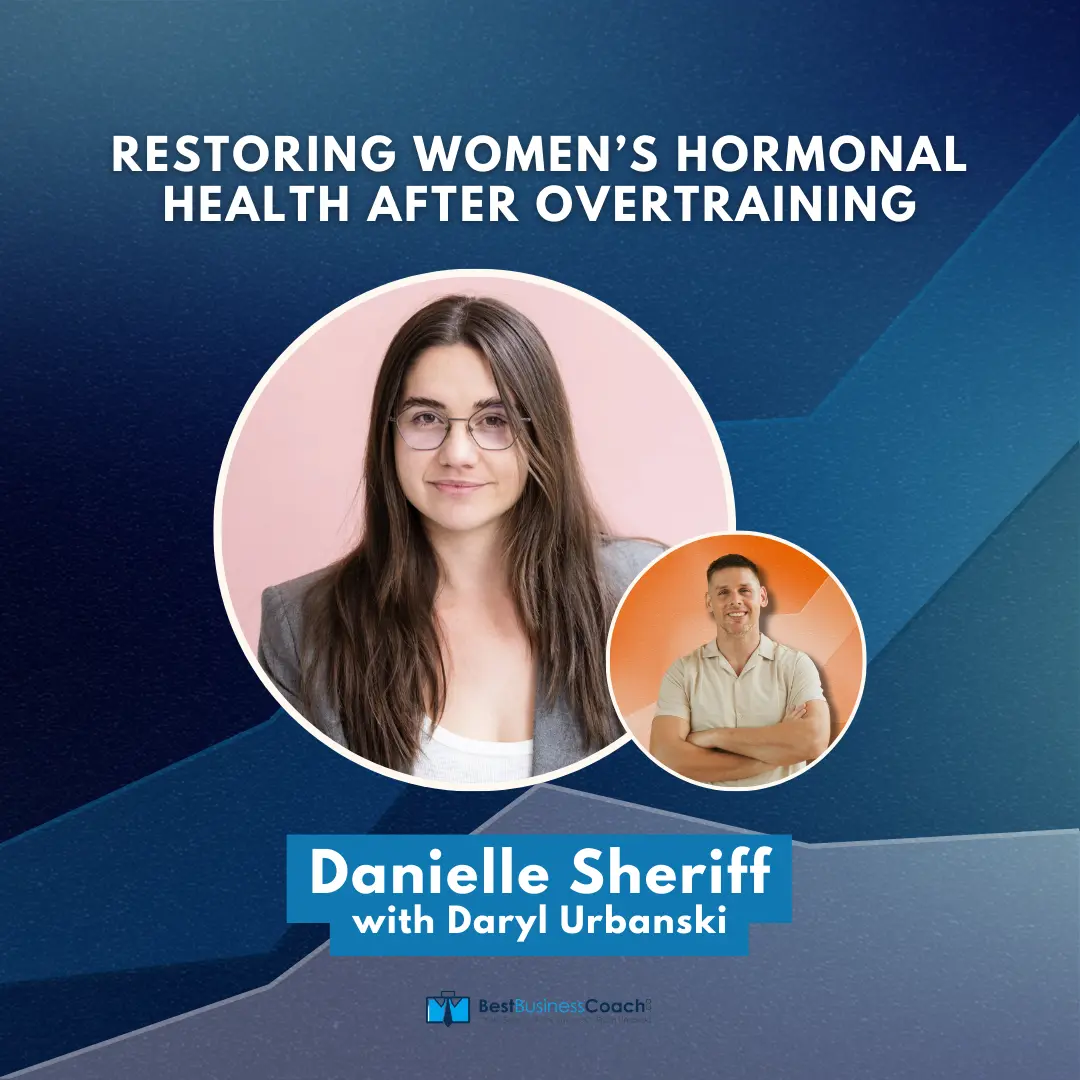
In this episode of The Best Business Podcast, host Daryl Urbanski speaks with Dani Sheriff. She is the founder of The HA Society and host of The Hypothalamic Amenorrhea Podcast. Dani brings both scientific rigor and lived experience to the conversation. She spent eight years without a period due to overtraining and under-fueling. This led her to build a global platform focused on restoring hormonal health safely and sustainably.
Reproductive health is a core performance metric, not a side issue. It explores how chronic stress, food restriction, and relentless achievement erode vitality over time. Walk away with a clearer understanding of what a healthy cycle actually represents. Tune in for grounded insight into recovery and the foundations of women’s hormonal health and resilience.
Here are three reasons why you should listen to the full episode:
- Understand the root causes and warning signs of Hypothalamic Amenorrhea and how it affects women’s hormonal health.
- Learn how to restore your menstrual cycle naturally without invasive treatments or synthetic hormones.
- Gain practical tools and metrics to track hormone recovery and foster long-term well-being for yourself or a loved one.
Resources
Episode Highlights
Danielle Sheriff Journey into Women’s Hormonal Health
- High achievement in fitness and career is often celebrated, even when it quietly pushes the body into chronic stress and depletion.
- For many women, extreme discipline around training and food can lead to hormonal shutdown without immediate or obvious warning signs.
- Daryl introduces Dani Sheriff, founder of The HA Society and a leader in women’s hormonal health and reproductive education.
- She spent years overtraining and under-fueling, which led to the loss of her menstrual cycle.
- This experience informs her work in hypothalamic amenorrhea recovery.
Understanding Hypothalamic Amenorrhea: Signs, Causes & Misconceptions
- HA is a condition where the brain’s hypothalamus suppresses reproductive hormones in response to stress, under-eating, and overexercising.
- Commonly, it’s misunderstood as a normal symptom of intense athletic performance.
- It’s a serious health concern compromising fertility, bone density, and cognitive function.
- Dani breaks down how restrictive eating and high-volume training quietly overstress the female body.
- HA is not just about missing a period, but a whole-body shutdown signal with widespread physiological consequences.
Archetypes at Risk: Who Is Most Affected by HA?
- HA most often affects a specific archetype: driven, high-achieving, Type A women who overtrain and underfuel.
- These women rarely miss workouts, track everything closely, and take pride in discipline, while living in a chronic caloric and emotional deficit.
- Dani notes that women in aesthetic-focused solo sports like CrossFit, running, and dancing face higher risk than those in team sports.
Why Fertility Is More Than Just Babies
- Fertility can seem irrelevant if pregnancy is not a goal, but Dani explains it is a marker of overall health.
- Estrogen and ovulation help protect against cognitive decline, brittle bones, low libido, energy crashes, and emotional instability.
- The menstrual cycle functions as a monthly report card, reflecting health through markers like temperature and cervical mucus.
- Restoring the cycle supports vitality, mental clarity, emotional balance, and healthy aging, not just reproduction.
Practical Tips for Tracking Women’s Hormonal Health
- Morning temperature tracking with a simple oral thermometer is one of the most reliable indicators of ovulation and hormone health.
- Cervical mucus signals upcoming ovulation and supports sperm, making it central to fertility awareness.
- Expensive ovulation devices often offer the same insight as manual tracking, where consistency matters more than technology.
- Just two weeks of charting can reveal ovulation patterns, low estrogen, or thyroid-related issues.
Healing Phase: The Hard but Necessary Reset
- Exercise and restriction must pause temporarily, since healing cannot occur while the same behaviors continue.
- Recovery requires eating more, resting more, and often gaining weight so ovulation can resume, usually within three to six months.
- Dani emphasizes valuing women’s hormonal health means choosing healing over appearance or control.
- Recovery requires shifting from the need to be smaller to the commitment to be well.
Danielle Sheriff – Founder of The HA Society & Women’s Hormonal Health Expert
Danielle Sheriff is a women’s hormonal health and reproductive expert and the founder of The HA Society. It’s a global clinic and community helping women with their reproductive health. Her work is grounded in both lived experience and evidence-based practice.
She went eight years without a menstrual cycle as a result of overtraining and under-fueling. This journey reshaped her focus on reproductive health and recovery. Today, she is recognized for bringing clarity, structure, and compassion to a complex and often misunderstood condition.
Through The HA Society and her podcast, Danielle educates and supports women around the world. She focuses on fertility, energy balance, and long-term health. Her approach challenges common assumptions about discipline, fitness, and food. She emphasizes sustainable recovery and informed decision-making. Her work continues to reshape how women understand health and resilience.
 Expertise: Mindset Coaching · Motivational Speaking · Resilience Building · MS Advocacy
 Connect with Danielle: LinkedIn | Instagram
The HA Society: Website | Instagram
 The Hypothalamic Amenorrhea Podcast: Website | Spotify | Deezer | YouTube
 Expertise: Business Growth, Sales, Marketing Automation, Leadership
 Work With Us:
  Podcast:
  Social: