Working less can sound impossible when a business depends too much on the founder. Many entrepreneurs stay busy because they confuse activity with progress. Real freedom starts when time, team, offer, and business model work together. The goal is not doing less for the sake of ease. The goal is removing waste so the right work creates more profit, more focus, and a better life.
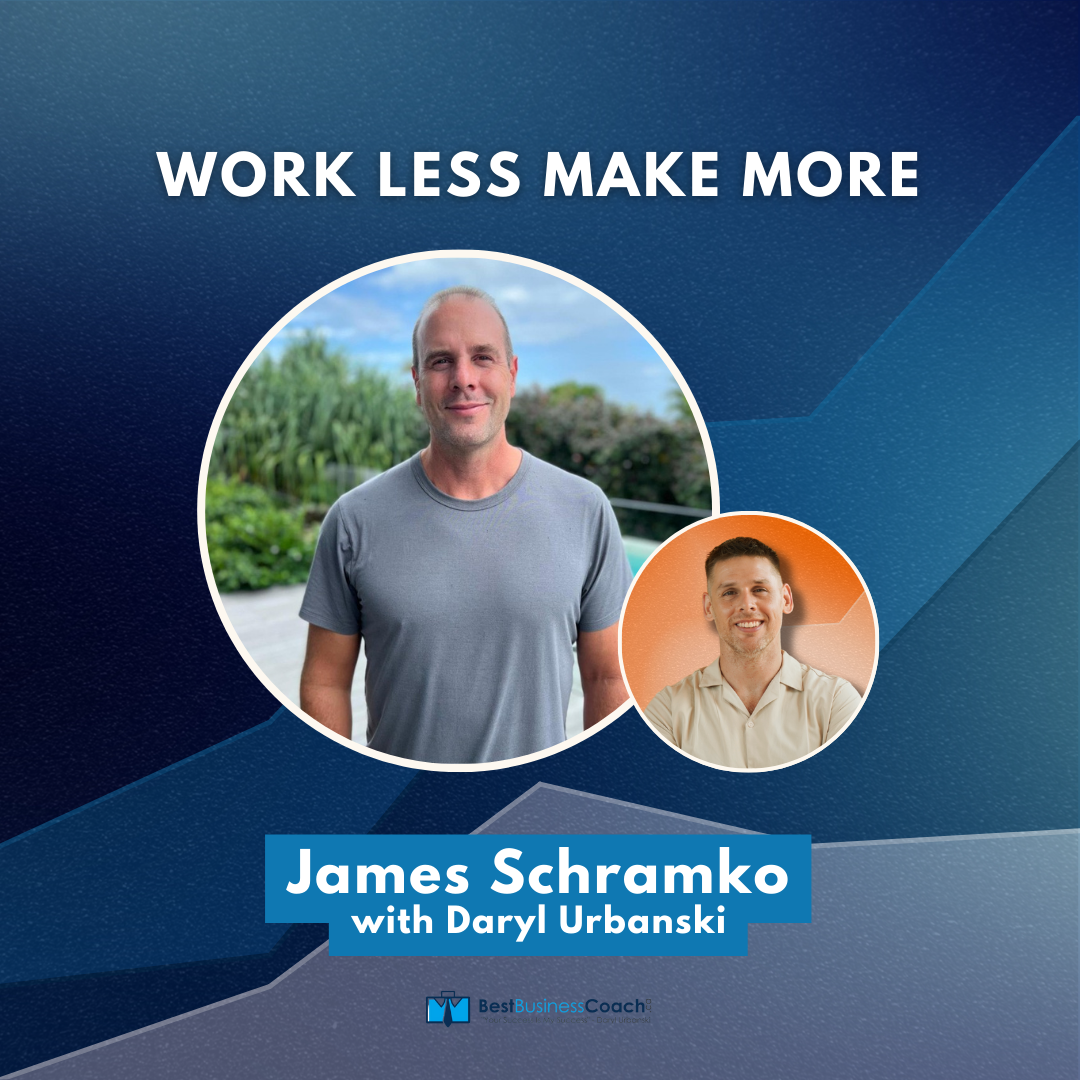
In this episode of the Best Business Podcast, host Daryl Urbanski sits down with James Schramko. He is the founder of SuperFastBusiness.com and author of Work Less, Make More. James shares how he built a seven-figure business without relying on constant launches, paid traffic, or joint ventures. He talks about building a business with stronger focus and fewer compromises. His approach is practical, direct, and built from years of real business experience.
A better business gives the owner more control, not more pressure. Growth improves when founders protect their time, build capable teams, and focus on offers with proven demand. Profit becomes easier when the business serves real buyers instead of chasing every new tactic. Tune in to learn how sharper focus, stronger systems, and fewer compromises can help you work less and make more.
Resources
- James Schramko: LinkedIn | Instagram | Facebook | X (Twitter)
- Check out his offers on his Website
- Listen to James’ Podcast: Spotify | Apple Podcasts
- Best Business Podcast with Daryl Urbanski - Where you can find more insightful interviews like this one.
Episode Highlights
Legacy and Lifestyle Design
Work Less, Make More came from years of business experience, unfinished drafts, and lessons James wanted to preserve.
The book was designed for busy entrepreneurs who need clear steps, not more tasks.
Every idea had to earn its place because James wanted the book to be short, practical, and useful.
Legacy shaped the project because he wanted his children to understand what he learned from building businesses.
Entrepreneurship, Book Writing, and Business Strategies
Too much source material created a challenge because the team had decades of content to sort through.
Cutting ideas became necessary so the final book could stay focused and easy to finish.
A printed book felt more permanent than a podcast, blog post, or PDF, so the final edits mattered more.
Strong business strategy begins with personal effectiveness before moving into offers, teams, and profit.
Building a Team, Delegating Tasks, and Creating Offers Which Convert
Time tracking shows where attention really goes, not where the calendar says it should go.
Delegation begins by finding tasks someone else can do better, faster, or more consistently.
The founder should protect time for work with higher value and stronger business impact.
Team building and offer creation become major leverage points once the fundamentals are clear.
Building and Managing a Remote Team With Systems and Training
A capable team lets the founder step back from daily tools, admin tasks, and front-end operations.
Systems protect the business when someone leaves, changes roles, or becomes unavailable.
Training helps team members improve their skills while making the company stronger.
Clear boundaries and checklists help remote teams work without constant founder involvement.
Effective Feedback and Criticism for Team Members
Direct feedback can build more trust than mixing praise with criticism in the same conversation.
Team members need clear expectations before they can understand what needs to improve.
Difficult conversations work better when the leader stays respectful, specific, and honest.
Genuine praise has more value when it is not used as a setup for criticism.
Management Techniques and Their Effectiveness
Some management habits sound useful until real experience shows their limits.
Better leadership comes from studying techniques, testing them, and refining what works.
Letting someone go can be handled with ethics, clarity, and care for everyone involved.
Strong managers notice good work often enough to reinforce better behavior.
Creating an Effective Offer Converting Customers
A real offer gives people a clear chance to buy, not just admire an idea.
Conversion proves a business idea faster than branding, logos, or perfect planning.
Many entrepreneurs delay sales by focusing on polish before testing buyer demand.
A strong offer creates income first, then creates better problems around scaling and fulfillment.
Selling Products and Services, Validating Offers, and Marketing Strategies
Buyer behavior matters more than polite interest because payment proves real demand.
Asking for the order helps validate an idea before too much time is spent building.
Early offers can start simple, then improve through real conversations and feedback.
Selling good products still requires reaching the right people with a clear reason to act.
Using Technology to Identify Pain Points and Create Targeted Offers
Online groups and keyword research can reveal the problems buyers already talk about.
Search behavior can show recurring demand for pain points people want solved.
Strong offers come from watching real frustration instead of chasing shiny tactics.
Fundamentals still matter because simple, proven moves often beat complicated tools.
Scaling Business Offers With a Focus on Marketing and Capacity Constraints
Scaling problems usually come from weak demand generation or limited delivery capacity.
A strong offer still needs enough systems, people, and processes behind it.
The right team helps turn momentum into sustainable growth instead of founder overload.
Better content can educate prospects, support customers, and bring past buyers back.
Reducing Compromise and Finding Success in Business
No compromise became a major theme because better business should create a better life.
Many frustrations come from choices left unquestioned for too long.
Counterintuitive solutions appear when entrepreneurs stop blindly following every expert.
Owning more of the business process reduces risk from platforms, shutdowns, and outside rules.
Healthy Eating Habits and Self-Care Practices
Energy and recovery affect how well a founder thinks, works, and performs.
Food choices can influence training, focus, and daily health.
Preparing meals at home can reduce friction and protect better routines.
Health matters because business owners bring their body and mind into every decision.
Breathing, Meditation, and Exercise for Better Sleep and Overall Health
Sleep, movement, and recovery support better performance in business and life.
Meditation and stretching can help reduce stress before sleep.
Breathing deserves attention because it can influence calm, energy, and endurance.
Hot yoga, mobility work, and better rest can support long-term resilience.
Mental Toughness and Pushing Limits in Sports and Life
Surfing can teach calm under pressure because fear shows up quickly in the water.
Breath control helps manage panic during difficult physical moments.
Mindset affects performance because the mind often sets the first limit.
Difficult situations become more useful when they are met with awareness and control.
Social Media, Focus, and Mental Health
Social media can pull attention away from a more focused and satisfying life.
Constant comparison makes it harder to feel grounded, clear, and in control.
Turning off notifications can return time, energy, and mental space.
Letting go of attachment supports the larger goal of working less and making more.
James Schramko – Online Business Strategist, Coach, and Podcaster
James Schramko is an online business strategist and coach who helps entrepreneurs build profitable, lifestyle-friendly businesses. He is known for his focus on simplicity, leverage, and sustainable growth. James teaches business owners how to scale without burnout or complexity. His work emphasizes recurring revenue, smart systems, and clear priorities. He is widely respected for his practical, no-hype approach to online business.
As a mentor and educator, James supports entrepreneurs at various stages of growth. He encourages building businesses supporting freedom, not constant hustle. His insights are shaped by years of hands-on experience and coaching. James is also the host of a long-running podcast focused on online business success. Through teaching and conversation, he helps business owners make better decisions and grow with confidence.
 Expertise: Online Business Strategy · Coaching · Recurring Revenue · Business Systems · Lifestyle Design
 Connect: LinkedIn | Instagram | Facebook | X (Twitter) | Website
 Listen to James’ Podcast: Spotify | Apple Podcasts
 Expertise: Business Growth, Sales, Marketing Automation, Leadership
 Work With Us:
  Podcast:
  Social: